

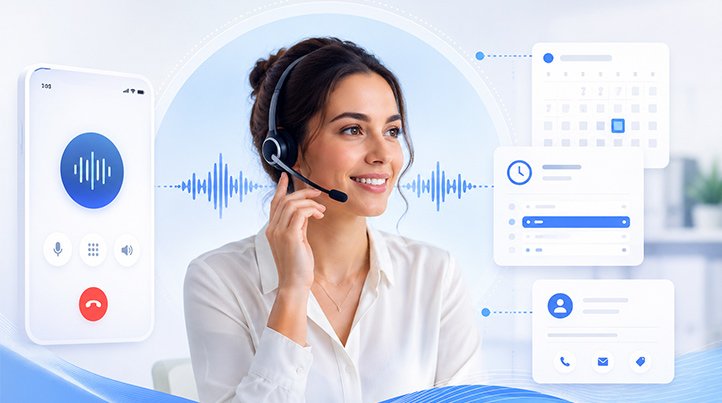
In today’s fast-moving business world, customer expectations have never been higher. When a prospective client or existing customer calls your business, they want an immediate, friendly, and helpful response. Unfortunately, traditional phone systems often force callers through confusing touch-tone menus, put them on hold for minutes, or send them straight to voicemail after hours.
Every missed call represents a missed sales opportunity, a delayed appointment, or a frustrated client who may turn to a competitor. AI voice agents offer a modern solution by answering every phone call immediately with natural, human-sounding conversation 24 hours a day, 7 days a week.
The Cost of Missed Calls and Frustrating Phone Menus
Studies consistently show that over 65% of callers hang up when placed on hold or forced through complicated automated phone menus. For busy service businesses—such as dental clinics, home maintenance providers, law firms, and retail companies—peak calling hours often overwhelm front-desk staff, leading to unanswered rings and lost revenue.
Voicemails rarely solve the problem, as modern consumers expect immediate answers and rarely wait around for a call back hours later. Having an intelligent voice assistant ready to answer on the very first ring transforms how customers perceive your brand and guarantees no inquiry is ever lost.
How Natural AI Voice Assistants Transform Phone Support
Modern AI voice assistants are completely different from the robotic, frustrating automated voices of the past. Built on advanced voice models and real-time speech processing, these systems sound warm, speak naturally, and understand conversational nuances just like a skilled human receptionist.
Instant Responses Without Awkward Conversation Pauses
One of the biggest breakthroughs in AI voice technology is ultra-fast response speed. When a caller asks a question or shares their details, the voice assistant processes the speech and replies in under a second. This seamless speed eliminates the awkward, robotic pauses that plagued older systems, creating a comfortable and natural conversational rhythm.
Polite Handling of Natural Caller Interruptions
In real life, people frequently interrupt conversations to clarify details or change their mind. Advanced voice agents feature intelligent interruption handling. If a caller speaks while the assistant is explaining a service, the agent immediately pauses, listens to the new input, and adjusts its response smoothly without repeating itself or stuttering.
Everyday Business Use Cases for AI Phone Agents
AI voice assistants are versatile and can be configured to manage a wide range of inbound and outbound calling scenarios across many industries:
- Healthcare and Clinic Appointment Scheduling: Voice assistants greet patients warmly, check doctor availability in real time, book or reschedule appointments, and answer common questions about office hours, accepted insurance, and preparation guidelines.
- Emergency Home Services Dispatch: When homeowners call with urgent plumbing, heating, or electrical issues after hours, the voice agent assesses the emergency, collects the home address, and coordinates on-call technicians immediately.
- Retail and E-Commerce Customer Inquiries: The voice assistant looks up order tracking numbers, clarifies return policies, explains product features, and sends follow-up SMS links directly to the caller’s smartphone.
Seamless Integration with Your Calendar and CRM Tools
An AI voice agent is much more than just a speaking bot—it is an active operational assistant connected directly to your business software. During a phone call, the assistant can check live openings in your Google Calendar or Calendly, update customer records in HubSpot or Salesforce, and send instant confirmation text messages to the caller.
After each call ends, the system generates a clear text summary and audio transcript, allowing your team to review important details at a glance without having to listen through full call recordings.
Essential Best Practices for Launching Your AI Phone Assistant
To get the best results from an AI voice agent, start by reviewing your most common phone inquiries, greeting styles, and booking procedures. Select a voice tone and accent that aligns closely with your brand identity, whether that is warm and empathetic for healthcare or energetic and professional for sales.
Always establish clear escalation pathways so callers who need specialized advice or complex support can be transferred smoothly to a live staff member with all context preserved.
Delivering Exceptional Caller Experiences Every Single Time
A reliable phone answering system is one of the most powerful investments a customer-focused business can make. With an AI voice agent handling front-line calls around the clock, your business never misses a lead, callers always receive immediate attention, and your team is freed from constant phone interruptions.
At Direct Impact, we specialize in engineering and deploying low-latency, natural AI voice systems tailored to your specific operational workflows. Connect with our engineering team today to explore how a custom voice assistant can upgrade your business communication.