

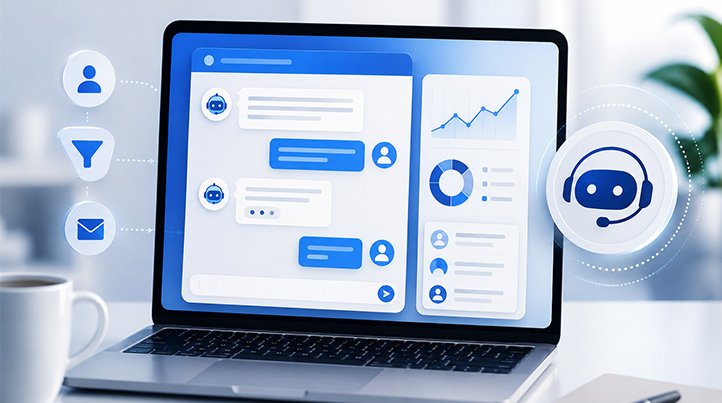
When potential customers visit your website, they usually have specific questions in mind. They want to know if your product solves their problem, how much a service costs, what your turnaround times look like, or whether you have their desired item in stock. If they cannot find clear answers within seconds, most visitors leave your site and look elsewhere.
Intelligent AI chatbots bridge this gap by providing immediate, personalized guidance to every visitor on your website. By answering questions accurately, recommending products, and capturing sales leads 24/7, smart chatbots transform passive website traffic into active, happy customers.
Why Basic Website Chatbots Frustrate Today’s Customers
Most internet users have had frustrating experiences with old-style button chatbots. These legacy systems rely on rigid decision trees that force visitors to click through endless menus, often leading to unhelpful generic answers or dead ends when a visitor types a custom question.
Modern AI chatbots take a completely different approach. Powered by advanced natural language processing, they understand conversational intent, interpret complex questions, and deliver direct, helpful answers that address the visitor’s exact needs in natural language.
The Power of Document-Grounded Conversational AI
A common concern among business owners is whether an AI chatbot might make up incorrect information or misquote prices. Modern custom chatbots solve this through document grounding, often known as Retrieval-Augmented Generation (RAG).
Eliminating False Claims with Verified Knowledge Bases
Instead of pulling answers from the open internet, your custom chatbot is trained exclusively on your verified business documents, policy manuals, product guides, and official FAQs. When a visitor asks a question, the chatbot references only your approved materials, ensuring every answer is factual, accurate, and completely on-brand.
Seamless Live Handoffs to Human Support Teams
While an AI chatbot can resolve 70% to 80% of routine customer questions on its own, certain high-value opportunities or complex technical issues benefit from human care. When a high-tier prospect requests personal help, the chatbot smoothly transfers the conversation to your team via Slack, Microsoft Teams, or your helpdesk, complete with a full conversation summary.
Three Ways AI Chatbots Drive Business Growth
Adding an intelligent chatbot to your website creates an immediate positive impact across multiple areas of your business:
- Instant Lead Qualification and Calendar Booking: The chatbot engages interested visitors while their buying intent is highest, asks qualifying questions, collects contact details, and books discovery calls directly into your sales calendar.
- Drastic Reduction in Repetitive Support Tickets: By answering common inquiries about shipping, pricing, office hours, and order tracking instantly, the chatbot frees your support team to focus on high-priority client matters.
- Personalized Product Recommendations Around the Clock: For e-commerce stores, the chatbot acts as a helpful digital shopping assistant, asking about preferences and suggesting matching products that increase average order value.
How to Prepare Your Business for a Smart Chatbot
Getting ready to deploy an AI chatbot is simple and straightforward. Begin by compiling your team’s most frequent customer questions, standard support answers, and website conversion goals. Organize your product sheets, pricing guides, and return policies so the chatbot has clear, high-quality reference material to learn from.
Choose a conversational tone that matches your brand personality—whether friendly and approachable or crisp and professional—to create a welcoming and consistent experience across every interaction.
Choosing the Right AI Chatbot Architecture for Your Brand
A truly effective chatbot should live wherever your customers prefer to communicate. In addition to a lightweight, responsive widget on your website, modern chatbots can be unified across messaging platforms like WhatsApp, Instagram Direct Message, and Facebook Messenger.
This multichannel synchronization ensures that returning customers receive consistent, helpful support regardless of which channel they use to reach out to your business.
Taking Your Customer Engagement to the Next Level
In an online world where speed and convenience win customers, having an intelligent conversational assistant on your website is one of the most effective ways to boost sales and elevate your customer service experience.
With an AI chatbot answering inquiries day and night, your business remains open, helpful, and responsive every single hour of the week. Contact the team at Direct Impact to discover how our custom conversational chatbots can help you capture more leads and delight your customers.